

Gaming parents worldwide face the same dilemma: which games are safe for their children? Video game age ratings exist to protect young minds from content that might be too mature, violent, or culturally inappropriate for their development stage.
While Western systems like ESRB (Entertainment Software Rating Board) and PEGI (Pan European Game Information) dominate global markets, the Arab world has developed its own approach to game classification. These regional systems blend international standards with local cultural values, religious considerations, and government policies.
Why Age Ratings Are Important
Protecting Young Minds
Age ratings serve as the first line of defense against inappropriate content. They shield children from excessive violence, gambling mechanics, and adult themes that could negatively impact their psychological development.
Empowering Parents

These classifications give parents the tools they need to make informed decisions. A busy parent can quickly glance at a rating and understand whether a game aligns with their family’s values and their child’s maturity level.
Cultural Alignment
Arab rating systems go beyond Western standards to address local sensitivities. They consider factors like religious imagery, modest dress codes, and traditional family structures that might not be priorities in European or American rating systems.
Read more: Why These 15 Video Games Are Banned in Arab Countries?
The General Principles of Game Ratings in the Arab World
Cultural and Religious Sensitivity Takes Priority
Arab rating boards place stronger emphasis on content that might conflict with Islamic values or local customs. This means stricter scrutiny of religious references, prayer depictions, and cultural representations.
Stricter Content Restrictions
- Nudity and adult content face near-zero tolerance
- Gambling elements are heavily restricted or banned
- Political content receives careful examination
- Religious imagery undergoes thorough review
International Standards with Local Modifications
Most Arab countries don’t reinvent the wheel. They adapt existing international frameworks like PEGI while adding cultural filters that reflect regional values and legal requirements.
Country-by-Country Breakdown
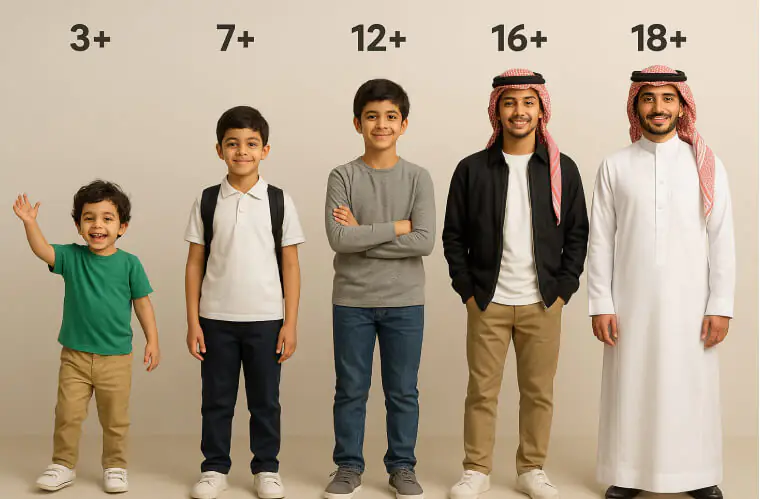
Saudi Arabia
Authority: General Commission for Audiovisual Media (GCAM)
System: Saudi Arabia pioneered structured gaming classification in the region with its 2016 system featuring five age categories:
- 3+ (Early childhood)
- 7+ (Children)
- 12+ (Pre-teens)
- 16+ (Teenagers)
- 18+ (Adults)
Process: Game publishers must submit comprehensive materials including gameplay footage, storylines, and character descriptions. GCAM evaluates content based on violence levels, language use, Adult content, and cultural appropriateness. The review process can take several weeks, and games failing to meet standards face modification requirements or outright bans.
United Arab Emirates (UAE)
- Authority: National Media Council (NMC)
- System: The UAE mirrors Saudi Arabia’s five-tier classification system, creating regional consistency for publishers and consumers alike.
- Focus: The NMC prioritizes family values and cultural appropriateness above all else. Games featuring excessive violence, adult themes, or content contradicting UAE social norms face heavy censorship or prohibition. The council works closely with retailers to ensure compliance at point of sale.
Egypt
- Authority: No centralized gaming rating board exists
- Practice: Egypt typically adopts the European PEGI system while applying informal cultural filters through distributor self-regulation and public pressure.
- Enforcement: The absence of official oversight creates inconsistent enforcement. Some games slip through unchanged while others face sudden bans following media attention or public complaints. Retailers often make independent decisions about age-appropriate sales.
Other Gulf Countries (Qatar, Kuwait, Bahrain, Oman)
- Approach: These nations generally follow Saudi Arabia or UAE leadership rather than developing independent systems.
- System: Most rely on regional standards or adapted PEGI classifications rather than creating original frameworks.
- Enforcement: Varies significantly between countries. Some maintain strict import controls while others depend entirely on retailer judgment and consumer awareness.
How These Ratings Differ from Western Standards
Content Restrictions Are More Comprehensive
Arab rating systems extend far beyond violence and language to encompass cultural and religious sensitivities rarely addressed in Western classifications.
Nudity and Relationships Face Zero Tolerance
Content featuring nudity, or adult themes that might receive mature ratings in Western markets often face complete prohibition in Arab territories.
Violence Standards Vary
While violence tolerance levels sometimes match Western standards, contextual factors matter more. Violence against religious figures or in sacred settings receives harsher treatment than generic combat scenarios.
Gambling References Are Prohibited
Loot boxes, casino games, and gambling mechanics that Western systems flag with warnings typically face outright bans in Arab markets.
Religious Depictions Undergo Intense Scrutiny
Any game featuring religious imagery, characters, or themes faces detailed examination to prevent content that might be considered disrespectful or inaccurate.
Conclusion
Age rating systems across the Arab world reflect a careful balance between international gaming standards and deeply held cultural values. These systems tend to be more restrictive and culturally specific than their Western counterparts, prioritizing family values and religious sensitivity.
As gaming continues its rapid growth throughout the Arab world, expect these rating systems to become more sophisticated and standardized. The current patchwork of national approaches may eventually evolve into more unified regional standards, making the gaming landscape clearer for families and developers alike.
Want a tip that will elevate your gaming experience overall? Use Gaming Gift Cards to explore endless games and get multiple features with Ar-Pay.

FAQs
Can I play Western-rated games in Arab countries without issues?
Most Western-rated games enter Arab markets, but they often undergo content modifications or carry different age classifications. A game rated T for Teen in the US might receive an 18+ rating in Saudi Arabia due to cultural content concerns. Some titles face complete bans if they contain gambling mechanics, excessive nudity, or religious imagery that conflicts with local standards. Check with local retailers or gaming communities for region-specific availability before purchasing.
How do parents verify if a game is appropriate for their children in the Arab world?
Parents should look for local rating labels on physical copies and digital storefronts, which typically display age categories like 3+, 7+, 12+, 16+, or 18+. Many Arab gaming retailers also provide cultural content warnings beyond standard violence or language alerts. Online gaming communities and parent forums specific to each country offer valuable insights about games that have been modified or banned locally. When in doubt, preview gameplay videos or read detailed reviews from regional sources.
What happens if a game violates local rating standards after release?
Games can face immediate removal from stores, digital platforms, or complete market bans following post-release reviews or public complaints. Egypt has seen several high-profile games pulled after media attention, while Gulf countries may require publishers to issue censored patches or modified versions. Retailers typically receive updated guidance from rating authorities, and consumers may lose access to online features or updates for non-compliant titles. Publishers often release region-specific versions to maintain market access.

Hager Hesham
Content Writer and your go-to gaming expert. I'm here to share my best practices, valuable strategies, and professional gamer guidance. Also, I'm a gem hunter for the best deals and gift cards, just to enjoy games at almost zero cost with AR-pay.