Roblox is more than a single game. It is a social platform, a creative toolkit, and a huge collection of user-made experiences that children and teens can enter with very little friction. That openness is exactly why it became so successful, and it is also why governments, parents, and community leaders across the Middle East have treated it with growing caution. The basic question behind the regional debate still matters in 2026: why would authorities restrict or ban a platform that many young players see as harmless entertainment?
The short answer is that the concern was never only about gaming. It was about child safety, moderation quality, communication tools, cultural expectations, and whether a platform built around user-generated interaction could realistically protect young users at scale. The source article makes a long list of country-specific claims about bans, chat suspensions, and official responses. Because those details are highly time-sensitive and cannot be re-verified here, they should be treated as reported claims rather than settled facts.
Why the regional picture is hard to summarize
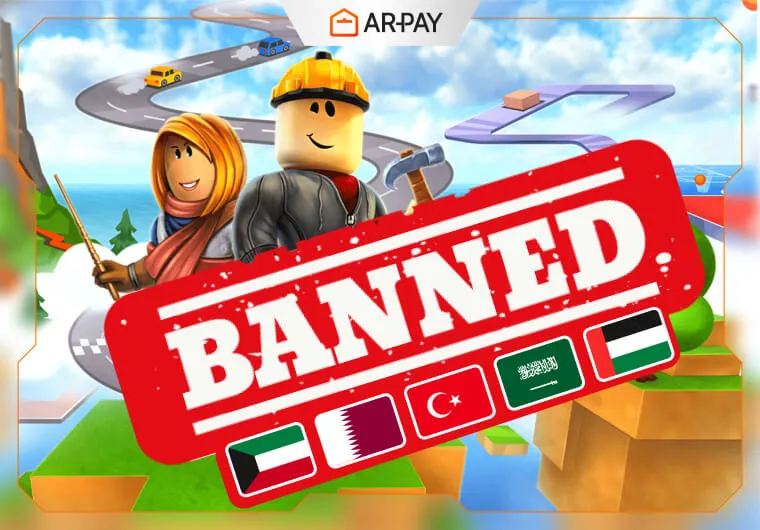
One reason this topic becomes confusing so quickly is that “the Middle East” is not one regulatory system. The source article correctly points out that the response was not uniform. Some places were described as moving toward full bans, while others were described as limiting communication features or placing the platform under stronger scrutiny. That difference matters because a full access block is not the same thing as a targeted restriction on voice or text chat.
The problem is that the article then becomes very specific, naming Kuwait, Algeria, Qatar, Turkey, Saudi Arabia, the UAE, and other Gulf states with exact explanations for what happened in each case. Without fresh sourcing, that level of precision is too unstable to present confidently in 2026. What can still be said safely is that the article describes a regional climate of concern rather than a single shared legal event.
The biggest concern: child safety
The strongest and most believable thread in the source article is child safety. Roblox is popular with younger players, and its mix of chat, user-generated worlds, roleplay, and open interaction makes it very different from a tightly controlled single-player game. When critics raise alarms, they are usually not focused on one mechanic in isolation. They are focused on the combination of content exposure, stranger contact, weak supervision, and the speed at which new experiences can appear on the platform.
That is why the article keeps circling back to harmful content and predatory behavior. Even without confirming every official statement, the logic is easy to follow. A platform used heavily by children will always face more intense scrutiny if parents and regulators believe its protective systems are too slow, too inconsistent, or too easy to bypass.
Why moderation is such a central issue
The article’s most useful analytical point is about moderation, especially Arabic moderation. It argues that the problem is not only the existence of dangerous or inappropriate material, but also the difficulty of identifying it reliably in Arabic across dialects, mixed writing styles, and Arabizi. That explanation is persuasive because it highlights a real platform challenge: moderation quality is never just about having rules, it is about understanding how people actually communicate.
In practice, that means a moderation system can look strong on paper and still fail users in a specific region if it does not understand local language habits, coded phrasing, or cultural context. The article treats this as one of the core reasons trust broke down. That may be true, but the exact extent of those failures across the region still needs human review before it should be stated as proven.
Cultural and legal pressure beyond safety tools
The source article also frames the issue as a cultural and legal conflict, not just a moderation problem. Because Roblox lets users create and share experiences freely, authorities may worry that some content will clash with local expectations, religious values, or legal standards. That makes the debate broader than “is the platform fun?” or even “does it have a report button?” The concern becomes whether the platform’s overall design fits the social rules of the place where it operates.
This is an important point because it explains why partial restrictions can happen even when a platform is not banned outright. Governments do not always need to remove the entire service to signal discomfort. They may instead focus on the parts that create the most risk or the most visible conflict, especially communication features. The article’s descriptions of chat-focused restrictions fit that logic, even if the exact country-by-country enforcement details are not safe to present uncritically.
What the article says Roblox tried to do
The article claims Roblox responded by engaging regulators, improving Arabic moderation technology, and expanding local moderation capacity. That kind of response would make sense if the company wanted to regain trust and keep regional access open. But again, these are exactly the sorts of corporate-response claims that can age badly or become oversimplified when they are not checked against current reporting.
Still, the article is right about one thing: broad promises are not enough. In a case like this, trust depends on whether regulators and families believe the platform can adapt its systems to local language, local laws, and local expectations in a measurable way. Safety claims have to feel operational, not promotional.
Why players and creators feel the impact
The source article usefully reminds readers that restrictions do not only affect access for casual players. Roblox also functions as a creator ecosystem. If parts of the platform are blocked or stripped of social features, that affects builders, developers, community organizers, and anyone whose audience depends on regional participation. For ordinary players, the loss can feel social first: they may still have games, but lose the shared communication that made those spaces feel alive.
So what should readers take from this in 2026?
The safest 2026 reading is that this article captures a regional anxiety that is bigger than one headline. It is about whether youth-oriented social gaming platforms can prove they are safe enough, culturally adaptable enough, and well-moderated enough to keep trust. The exact legal status in each named country is too volatile to preserve from this source alone. But the pattern behind the article still makes sense: where regulators and families believe the platform cannot control interaction risk, restrictions become much easier to justify.