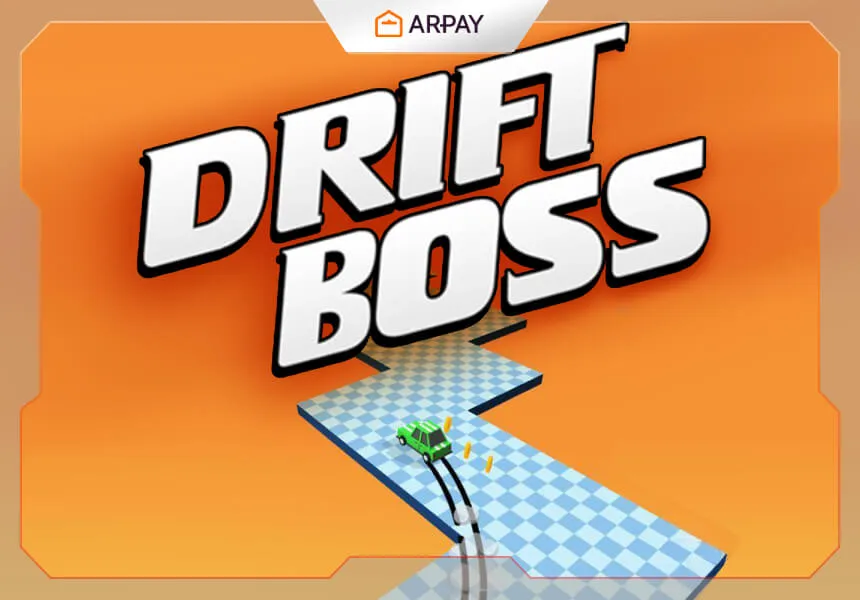
Speed, precision, and rhythm still define the appeal of Drift Boss 2 in 2026. The original article understood that part well. This is the kind of driving game that looks simple at first and then quietly punishes every lazy input. One mistimed hold, one greedy angle, one overconfident correction, and a clean run turns into a crash. That is also why it is satisfying. Improvement feels visible. You stop reacting late, you start reading corners earlier, and suddenly the same track that felt unfair starts feeling readable.
The older version of this guide leaned heavily on specific feature claims such as weather shifts, ghost mode behavior, cross-device saves, control customization, detailed scoring windows, and technical performance assumptions. Many of those are exactly the kind of details that may have changed or may not be safely verified here in 2026. What still works extremely well is the skill advice underneath those claims. If you want to drift better, score more consistently, and stop throwing away good runs, the fundamentals remain the same: controlled inputs, earlier reads, cleaner exits, and smarter risk selection.
How Drift Boss 2 actually tests you
At its core, Drift Boss 2 is about committing to the right amount of drift for the space in front of you. That sounds obvious, but it is where most runs die. Newer players think in extremes: either no drift or a huge dramatic slide. Better players make smaller decisions. They tap to correct, hold just long enough to rotate, then release early enough to leave the corner with control instead of panic. The game rewards that restraint more than flashy oversteer.
The source article describes a press-and-hold control style, and whether that exact handling model is unchanged or slightly updated, the practical lesson still stands. Your drift input is not only about entering the turn. It is about setting up the exit. Most crashes happen because players think the turn is over later than it really is. They keep holding, the car keeps rotating, and the recovery space disappears.
The most important habits for better runs
The first habit is to drift earlier than your nerves want to. On difficult corners, hesitation is worse than modest overcommitment because late inputs usually force ugly corrections. Starting a fraction earlier gives you room to trim the line instead of rescuing it.
The second habit is to value exit speed over dramatic angle. Long drifts feel impressive, but a clean release that lines you up for the next section is usually worth more than squeezing out one extra second of sideways motion. This is especially true in games where combo or multiplier systems depend on staying alive and linking corners smoothly rather than performing one huge hero move.
The third habit is to stop treating every track section the same. Tight urban-style corners, downhill-feeling turns, loose-surface style segments, and more experimental layouts all ask for different timing. The original article broke tracks into city, mountain, desert, and space-station styles. Those exact labels and their presence should be verified before being treated as fixed content. But the deeper point is excellent: track context changes what “correct drifting” looks like.
How to score higher instead of just surviving
A lot of players plateau because they learn how not to crash but never learn how to score efficiently. Survival gets you farther. Rhythm gets you points. That means chaining actions together, keeping your car under enough control to flow into the next corner, and avoiding the ugly resets that kill momentum. The older draft mentions multiplier windows, spark-color feedback, near misses, and specific combo counts. Those exact systems may be patch- or version-sensitive. Even so, the scoring philosophy remains useful: smooth sequences beat isolated moments.
If you want better numbers, focus on three things. First, keep transitions short. The longer you spend wobbling between corners, the more likely you are to lose whatever streak logic the game rewards. Second, prioritize clean exits, because they set up the next scoring event faster. Third, only chase risky bonus behavior when the run is already stable. High scores usually come from discipline plus a few calculated gambles, not from playing recklessly from the first second.
Advanced technique without overcomplicating it
The source article mentions techniques like short correction taps, pendulum-style left-right rhythm management, and recovery timing after spins. Whether every named technique still maps perfectly to the current build is something a human should verify. But as training concepts, they are solid. The big leap from average to strong play comes when you stop making one giant correction and start making smaller pre-emptive ones. Micro-adjustments keep the car usable. Big emergency swings usually mean you already lost the line several moments earlier.
That is also why rhythm matters so much on zigzags and quick switchbacks. Players who freeze after the first turn usually over-rotate into the second. Players who anticipate the next direction change leave themselves enough balance to swing back smoothly. You are not just reacting to the corner you are in. You are preparing for the corner after it.
Common mistakes that waste good runs
The most common mistake is holding the drift too long because it feels safer than releasing. It is not. Overholding often creates the very spin or collision you were trying to avoid. The second mistake is trying to recover too dramatically after a small error. Many runs are still salvageable if the correction is modest. They become unrecoverable when the correction is twice as strong as the mistake.
Another big mistake is chasing style before consistency. Fancy wall-hugging, ultra-late drifts, and risky near-miss play may raise the ceiling of a run, but only if your base control is reliable first. If you are still crashing on ordinary bends, the answer is not more aggression. It is cleaner timing.
Drift Boss 1 versus Drift Boss 2
The original article frames Drift Boss 2 as a substantial upgrade over the first game, citing changes in physics feel, visuals, modes, technical smoothness, and score systems. Those are the exact areas where stale specifics can slip in fastest, so they should be treated cautiously in 2026. Still, the comparison idea is helpful. The sequel is presented as deeper, more demanding, and more interested in rewarding clean technique than simple survival. Whether every listed upgrade is still accurate, that shift in emphasis feels like the right way to describe the sequel’s identity.
Platforms, performance, and practical expectations
The source text says Drift Boss 2 runs in browser, works across common desktop and mobile browsers, saves progress automatically, and stays lightweight on system demands. Those may all be broadly plausible, but they are also operational claims that should be checked before republishing as guaranteed facts. The safest practical advice is timeless anyway: close extra tabs, keep your browser current, test on the device you actually plan to use, and do not assume mobile touch control will feel identical to desktop precision.
Conclusion
Drift Boss 2 still makes the same promise that keeps players coming back: if you get better, the game feels better. That is the heart of it. Not secret unlocks, not miracle tricks, not magical settings. Better timing. Better exits. Better rhythm. The best players are not the ones who drift the longest. They are the ones who waste the least movement and turn every corner into setup for the next one.
If you take one lesson from this refresh, let it be this: slow down mentally before you speed up in-game. Read the turn early, drift with intention, and stop asking every run to be spectacular. Clean driving builds spectacular scores on its own.