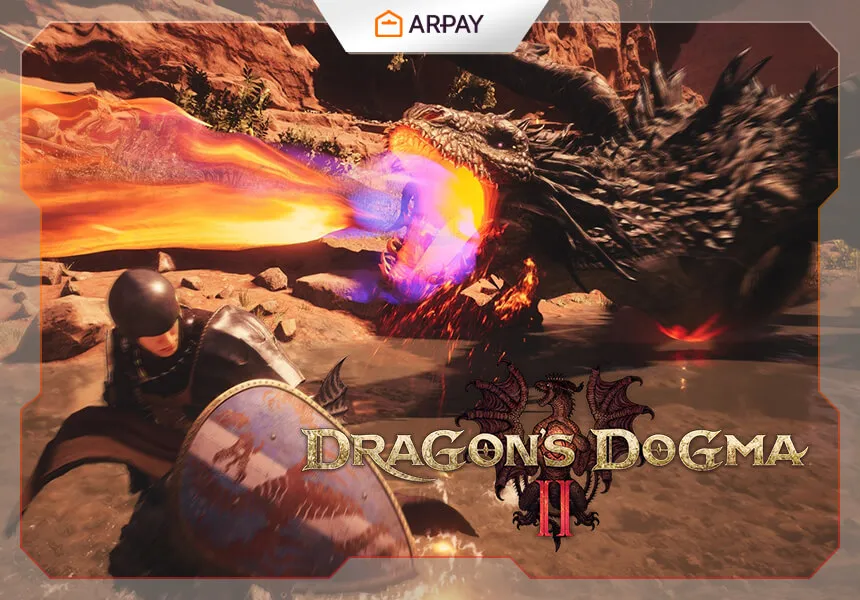
Dragons Dogma 2 Release Date and Platforms
Dragons Dogma 2 is slated for release on March 22, 2024, marking a highly anticipated return to the beloved RPG franchise. This sequel promises to build upon its predecessor's rich, immersive world and intricate gameplay mechanics. Available platforms include:- PlayStation 5
- Xbox Series X|S
- Windows PC via Steam
Dragons Dogma 2 Gameplay Mechanics and Features
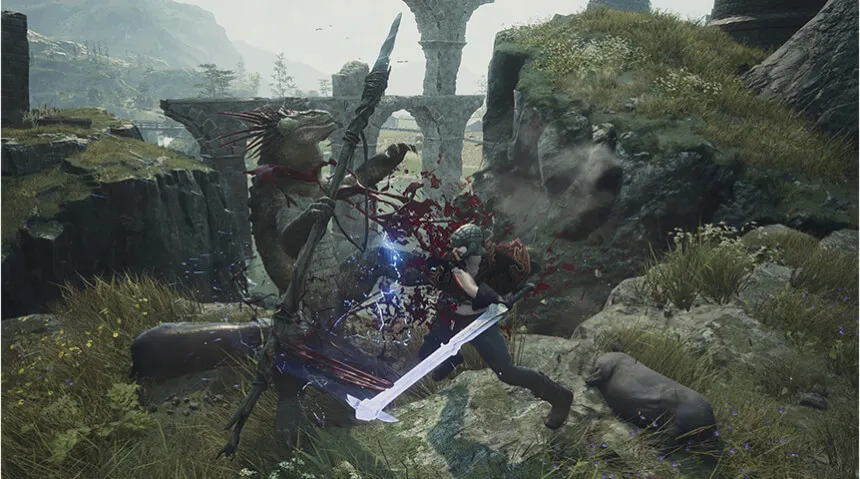 Some of the cool gameplay mechanics and features of Dragons Dogma 2 are as follows:
- Ten playable vocations: A new addition to which are Archer, Thief, Mystic Spearhand, Trickster, and Warfarer. Each vocation features different skills and ways of conducting the game, enabling players to diversify their strategies for defeating enemies.
- Class Progression: Moving forward in the game, one can unlock more and more vocations, which means that many options will open for customization and further specialization.
- Huge World: The game features an open world four times bigger than the previous game. Moreover, the atmosphere covers wide as well as varied environments. From thick forests with a variety of trees to mountain peaks, players will journey through all sorts of vistas.
- Dynamic World: Day-night and weather cycles, and adapting, changing ecosystems bring dynamics to the whole exploration process.
- Action-RPG Combat: The combat system merges real-time action with RPG elements in a heated fight with various enemies, including dragons, griffins, and imaginary creatures.
- Pawns System: One can also recruit pawns to be part of their party, filling gaps in the capabilities of one's party and supporting each other during combat. Customization and leveling up the pawns add depth to the party composition.
- Rich Storyline: The game is deep and Strike Box-like in its storyline, having choices and consequences that affect the direction the story will take. Players assume the role of Arisen on a quest to reclaim his heart, which a dragon took.
- Branching Quests: Many main and side quests with branching paths can help players craft their experience.
- Fast Travel: New forms of fast travel, such as oxcarts, make it easier to traverse the wide worlds while staying immersive.
- Campsites: Set up campsites to rest at, heal at, and interact with your pawns, giving safe havens against the horrors of the world.
- Augmented Gear: Vocations with magical inclinations can attach elemental effects onto weapons to increase damage to specific types of enemies.
Conclusion
FAQs
Is there a release date for Dragon Dogma 2?
The hot action role-playing game has an official release date of March 22, 2024, but it will be available to play on March 21 on Steam in certain regions.Is Dragons Dogma 2 PS5 exclusive?
No, Dragons Dogma 2 is not PS5 exclusive.Is Dragons Dogma 2 like Elden Ring?
Compared to Elden Ring, Dragons Dogma 2 feels more like a D&D campaign with your party than a brutal climb to the top of the food chain. That said, both games heavily rely on your curiosity to lead you toward your next objective. You won't get very far if you expect them to tell you what is or isn't interesting.Introduction: What an In-Depth Exploration Can Cover Responsibly
The title “Dragons Dogma 2: In-Depth Exploration of the Upcoming RPG” sets a clear expectation: readers want a deeper understanding of what kind of role-playing experience this game may offer and how to approach it well. Since the current body is empty, this expansion avoids unverified claims about confirmed features, release details, classes, regions, story events, or technical specifications. Instead, it focuses on a practical and reliable framework: how to evaluate a large fantasy RPG, how to prepare for complex systems, and how to get more value from exploration, progression, and decision-making once you start playing.
What “In-Depth” Should Mean for an Upcoming RPG
An in-depth guide should not be a rumor summary. It should help readers think clearly about the core pillars that make a major RPG successful: world cohesion, meaningful progression, satisfying combat loops, discovery-driven exploration, and quest structures that reward attention. For upcoming games especially, depth comes from interpretation and preparation, not certainty about unannounced details. A useful exploration gives players language and criteria they can use later, so they can decide for themselves whether the game delivers on its promise.
Core RPG Pillar 1: World Cohesion Over World Size
In fantasy RPGs, players often ask how big the world is. A better question is how coherent the world feels. A coherent world gives strong spatial identity, logical encounter flow, and environmental storytelling that makes travel meaningful. If locations feel connected by culture, danger level, and visual language, exploration becomes naturally rewarding. If locations feel random, even a very large map can become forgettable. For an upcoming title framed as a deep RPG experience, readers should prioritize cohesion over raw scale when evaluating early impressions and post-launch feedback.
Core RPG Pillar 2: Character Identity and Build Direction
Good RPGs give players enough flexibility to experiment, while still making choices matter. Whether the game offers classes, archetypes, skill trees, loadout styles, or role-specialization systems, the key is identity clarity. Players should feel that their build reflects a deliberate style, not a pile of disconnected upgrades. A strong in-depth approach for any upcoming RPG is to ask: does progression shape how I solve problems, or only inflate numbers? Real role-playing depth appears when different build paths encourage distinct tactics and tradeoffs.
Core RPG Pillar 3: Combat Depth and Readability
Combat in large RPGs needs both spectacle and readability. Spectacle creates excitement, but readability creates trust. Players need clear feedback on timing, spacing, risk, and consequence. A deep combat system usually supports multiple valid approaches: pressure-based play, positional play, control-oriented play, resource-conservative play, or hybrid adaptation depending on encounter type. For readers evaluating an upcoming RPG, the practical marker is this: does combat reward learning and adaptation, or does it collapse into repetitive behavior?
Core RPG Pillar 4: Exploration That Teaches, Not Just Distracts
Exploration quality is often misunderstood as sheer volume of points of interest. In strong RPG design, exploration teaches the player how the world behaves. Terrain risk, enemy density, resource scarcity, and route logic all communicate valuable information. Ideally, players become better navigators and decision-makers over time, not just better collectors of map icons. A useful exploration guide for Dragons Dogma 2 should prepare readers to value this learning loop: observe, test, adapt, and revisit with improved capability.
Core RPG Pillar 5: Quest Structure and Decision Weight
Quest quality in RPGs depends less on quantity and more on structure. Strong quest design offers context, consequences, and pacing variety. Even when outcomes are not radically branching, players should feel that timing, preparation, and chosen approach influence the journey. For an upcoming game, readers should watch for signs of quest density versus quest value. High quest count can look impressive, but lasting engagement comes from quests that connect to world identity and player expression.
Practical Approach for Your First 10 Hours
The first hours of any dense RPG are where many players either build momentum or burn out. A practical approach is to treat the opening phase as system literacy, not optimization. Learn traversal rhythm, combat cadence, resource patterns, and progression logic before chasing perfect outcomes. If you force efficiency too early, you may miss the design language of the game and create frustration.
- Start with a broad playstyle goal, not a min-max plan.
- Test combat options in low-pressure situations first.
- Track which encounters punish overextension.
- Use side paths to learn world risk levels and travel logic.
- Adjust your build only after identifying repeated weaknesses.
How to Read Early Community Feedback Without Getting Misled
For high-profile RPG releases, early discussion can be noisy. Some players judge too quickly from performance concerns, while others overpraise based on hype. The best approach is to sort feedback by signal quality. Look for reports that explain context: build type, difficulty, progression stage, and reproducible examples. Generic praise or generic complaints are less useful than concrete observations tied to systems. This helps readers avoid mood-driven reactions and make better purchase or play decisions.
Comparison Point: Checklist Open Worlds vs Systems-Driven RPGs
Many modern open-world games are checklist-heavy: large maps, frequent markers, and predictable activity loops. Systems-driven RPGs are different. They emphasize interaction depth, problem-solving, route planning, and emergent outcomes from overlapping mechanics. If Dragons Dogma 2 aims to be an “in-depth” RPG experience, readers should expect stronger system interplay than simple objective clearing. That means your choices in movement, preparation, risk tolerance, and timing should matter as much as raw character strength.
Common Player Mistakes in Large Fantasy RPGs
Even experienced players make avoidable mistakes when starting big RPGs. Most mistakes come from impatience or over-optimization too early. Avoiding them leads to faster mastery and less frustration.
- Treating every encounter as a pure damage race.
- Ignoring positional play and terrain influence.
- Overcommitting to one strategy before understanding enemy variety.
- Assuming side content is optional filler rather than skill training.
- Following external build advice before learning your own strengths.
- Skipping reflection after difficult encounters.
Skill Growth Framework: Improve Faster With Small Reviews
If you want to improve quickly, use short post-session reviews. You do not need advanced analytics. You only need consistent reflection. After each session, write one thing that worked, one recurring mistake, and one change to test next time. This method transforms random play into deliberate progression and helps you adapt to evolving challenge tiers in long RPG campaigns.
- What encounter type felt hardest today, and why?
- Did your build support your actual play behavior?
- What single adjustment could reduce repeat failures?
Summary Box
- Use world cohesion, not map size, as a key quality signal.
- Treat early hours as learning, not optimization.
- Evaluate combat by readability, adaptability, and reward for skill growth.
- Judge quest value by consequence and context, not count alone.
- Filter community feedback for concrete, contextual observations.
- Build your own play identity before copying external templates.