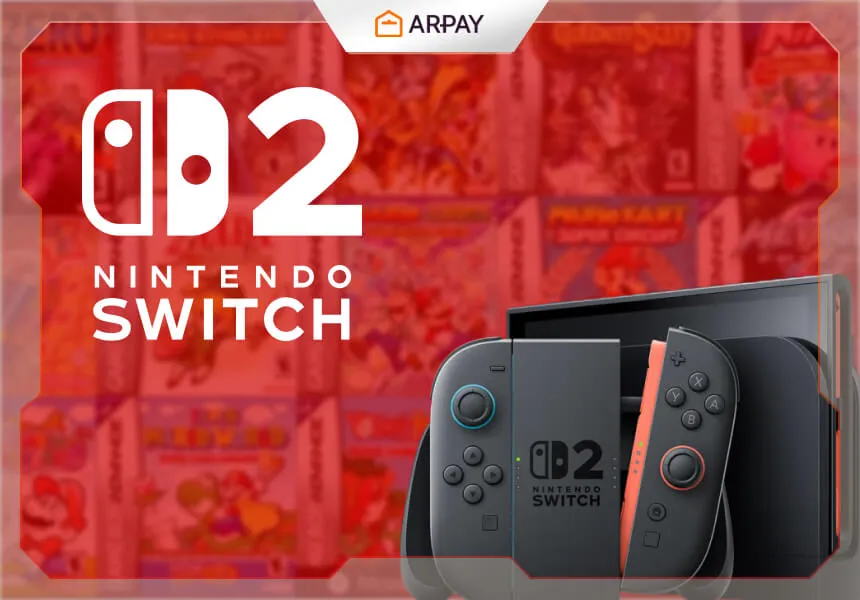
By 2026, the original version of this article reads less like a stable buyer’s guide and more like a snapshot of pre-launch excitement. That is not a flaw by itself. Early console coverage often lives on rumors, analyst guesses, leak culture, and hopeful comparisons. But it does mean this piece needs a different kind of refresh. Instead of pretending those old claims are still current, the smarter approach is to explain what the article was trying to capture: why the idea of a “Switch 2” felt important, which rumored upgrades sounded most meaningful, and which claims are now too time-sensitive to repeat without verification. []
The original tone was big and breathless, and honestly that part still fits. A new Nintendo platform is never just about specs. It is about whether Nintendo can preserve the magic of the hybrid Switch idea while pushing it far enough forward that it feels truly new. That is why so much of the old discussion centered on resolution, battery life, storage, controllers, and backward compatibility. Those are not random feature bullets. They are the pressure points that decide whether a successor feels convenient, future-facing, and worth the jump.
Release date and pricing: where the article ages fastest
The weakest part of the 2025 article is also the most obvious one in 2026: the release-window and price discussion was built almost entirely on prediction. It talked about an early 2025 launch, a likely six-to-seven-year cycle, and an expected price band between $349 and $399. All of that may once have sounded plausible, but it is exactly the kind of information that becomes unsafe once time moves on. In 2026, those statements are not useful unless a human re-checks them against what Nintendo actually announced and shipped. []
That does not make the section worthless. It still shows what people cared about most. They wanted to know whether the next system would remain family-accessible, whether Nintendo would protect the broad appeal of the original Switch, and whether the company would position the hardware as a premium leap or a careful evolution. Those questions still matter more than the exact rumor price itself.
Which rumored features actually mattered
The feature list in the original article was highly speculative, but it was pointed in the right direction. Improved performance, better battery life, more storage, revised Joy-Cons, and backward compatibility were the upgrades that would have made the biggest real-world difference for players. Those are the things that shape whether a handheld-hybrid console feels modern every day, not just in a marketing trailer.
Take performance, for example. The article focused on a custom NVIDIA chipset, 4K docked output, and 1080p handheld play. Those exact claims should be treated as rumor-era material and not as confirmed 2026 facts without review. [] But the underlying expectation was sound. Players wanted a machine that could preserve Nintendo’s flexibility while narrowing the technical gap between the Switch ecosystem and newer console standards. That is not just a spec fantasy. It is a design demand.
Battery life and storage mattered for the same reason. The original Switch proved the hybrid concept worked. The next challenge was reducing compromise. Better battery life means the handheld promise feels less fragile. More internal storage means fewer immediate cleanup decisions. Even if the exact figures in the article are no longer trustworthy on their own, the priorities they point to are still the right ones. []
Why backward compatibility was such a big deal
If there is one rumor in the article that clearly reveals player psychology, it is backward compatibility. People did not want a clean break. They wanted continuity. The Switch library became too large, too varied, and too central to everyday gaming habits for a hard reset to feel comfortable. Backward compatibility was never just a bonus feature in this conversation. It was a trust signal.
That is also why the article’s comparison table, despite being stale in its specifics, still works conceptually. It is trying to answer a fair question: if the next machine exists, what does it fix? Resolution, storage, battery expectations, controller reliability, and connectivity were all shorthand for whether Nintendo had listened to years of real-world user friction. The exact table entries now need human review, especially anything involving hardware standards, controller redesigns, and compatibility scope. [] But the comparison framework itself remains smart.
The most speculative part: gameplay innovation
The article’s gameplay-innovation section is where the rumor energy becomes hardest to trust. Enhanced multiplayer systems, integrated voice chat, augmented reality features, dynamic docking power, launch exclusives, and broader third-party support were all presented as likely directions. In 2026, almost every line in that section needs verification before being treated as factual. [] These are exactly the kinds of claims that spread well in pre-release coverage because they sound believable and exciting at the same time.
Still, the section is revealing. It shows that the dream of a Switch successor was never about raw horsepower alone. Players wanted Nintendo to modernize its online experience, improve platform convenience, and make the docked-versus-handheld split feel less like a compromise. In other words, they wanted the next machine to feel more complete, not just more powerful.
What this article is really useful for in 2026
As a strict news piece, the old article is too stale to trust without fresh checking. Too much depends on release timing, rumored hardware, price estimates, feature leaks, and expected launch software. [] But as an explainer of what players wanted from a Switch successor, it still has value. It captures the priorities clearly: stronger performance without losing portability, more dependable controllers, better storage, compatibility with existing libraries, and a more modern online ecosystem.
That makes the best 2026 reading of this piece surprisingly simple. Do not treat it as a specification sheet. Treat it as a record of expectation. It shows what the market thought the next Nintendo step should be, and in that sense it still tells you something useful about why a Switch successor mattered so much in the first place.
Conclusion
Nintendo Switch 2: Next-Gen Gaming Innovation in 2025 now works best as a rumor-era snapshot refreshed for 2026 caution. Its pricing, release-date, feature, and launch-library claims are too time-sensitive to preserve as current facts without new reporting. [] But the article still succeeds at identifying the real stakes: Nintendo needed a successor that felt faster, smoother, more durable, and more respectful of the library people had already built. That was the heart of the hype then, and it is still the most interesting thing about the article now.