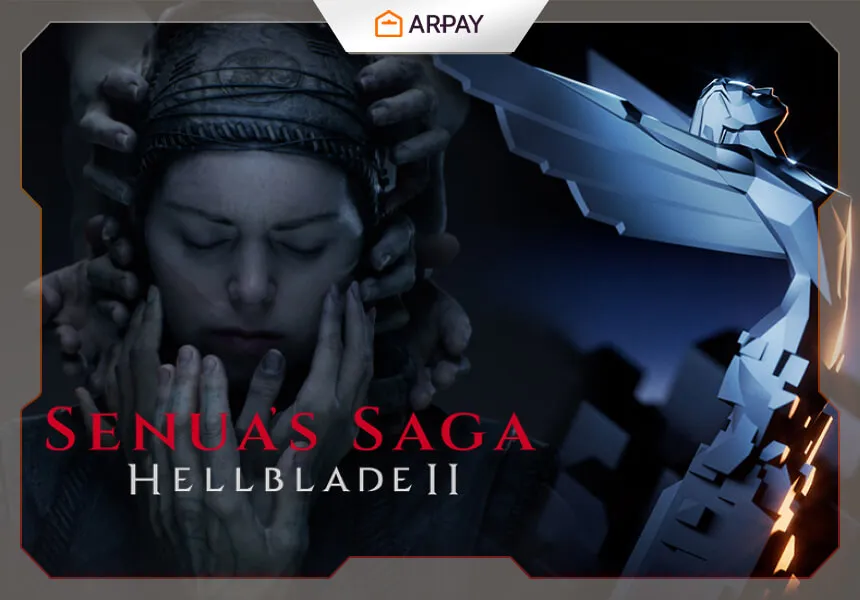
Senua’s Saga: Hellblade II Triumphs at The Game Awards 2024 by pushing the series forward while staying true to what made the first game unforgettable. Set for early 2024, this sequel takes players back into the mind of Senua, the fierce Celtic warrior, and builds on the original’s psychological intensity with bigger scope, stronger combat flow, and deeply immersive audio design.
If the first game felt like an intimate journey through pain, fear, and survival, Hellblade II keeps that emotional core but expands nearly every layer around it. From narrative tone to technical demands, this is a sequel designed to feel both familiar and more ambitious.
Senua’s Saga: Hellblade II Game Overview
Ninja Theory’s latest creation picks up right where the first game left off. That continuity matters: the story remains centered on Senua’s perspective, and the world continues to blend myth, trauma, and survival in ways that are both unsettling and emotionally powerful.
Norse mythology takes center stage in Senua’s Saga: Hellblade II, placing Senua in a setting where gods and monsters collide. The narrative is framed as a harsh, mythic struggle, but it is still grounded in personal stakes. The game’s strongest moments come from how it balances large-scale mythic imagery with Senua’s inner experience.
Gameplay Features and Mechanics
Combat That Packs a Punch
The fighting system shows major growth from the first title. Combat feels heavier, sharper, and more deliberate, rewarding timing and positioning over button-mashing. Encounters are intense and demanding, but they remain readable if you pay attention to movement, spacing, and enemy patterns.
Sound Design That Changes Everything
Sound sits at the game’s core. Whispers track your movement and pressure your decisions, drums intensify combat sequences, and environmental audio like wind through caves creates constant tension. Audio in Hellblade II is not background decoration; it is a gameplay layer that informs awareness, threat detection, and pacing.
Movement and Controls That Feel Right
Senua’s movement transitions smoothly between running, climbing, and fighting. This fluidity improves moment-to-moment play and helps the game maintain immersion, especially in sequences that move quickly from exploration to combat to puzzle-solving.
Boss Fights That Test Your Skills
Each major boss battle feels like a distinct event with unique mechanics and multiple phases. These fights are designed to test adaptation, not just reflexes. Learning early patterns and reading subtle changes later in the fight is essential for surviving the hardest encounters.
Setting and Scale
Compared with the first game, Hellblade II opens up the world and sense of scale. The environments feel broader while still preserving the series’ oppressive mood and focused storytelling style.
Platforms, Availability, and System Requirements
If you are planning to play on PC or Xbox, here is what you need to know to run Senua’s Saga: Hellblade II properly.
PC Requirements
Minimum Requirements:
- Windows 10/11 64-bit
- AMD Ryzen 5 2600X or Intel i5-8400
- 16GB RAM
- NVIDIA GTX 1070 8GB or AMD RX 5600 XT
- DirectX 12
- 80GB free storage space
- SSD recommended for faster loading
Recommended Requirements:
- Windows 11 64-bit
- AMD Ryzen 7 3700X or Intel i7-9700K
- 32GB RAM
- NVIDIA RTX 3070 or AMD RX 6800
- DirectX 12
- 80GB SSD storage
Xbox Series X|S Specs
- Series X runs at 4K resolution and 30 FPS for sharp visuals and steady performance.
- Series S runs at 1440p resolution with the same smooth gameplay target.
- Quick Resume support lets you switch games and return where you left off.
- Storage requirement is roughly 80GB on console.
Where to Get It
- Xbox Game Pass
- Microsoft Store
- Steam
You can enhance your gaming experience by purchasing PlayStation Gift Cards, Xbox Gift Cards, or Steam Gift Cards from ARPay.
Tips and Tricks for Senua’s Saga: Hellblade II
These practical strategies help build a strong foundation in a game that rewards focus, patience, and situational awareness.
Combat Essentials
- Keep distance from groups of enemies; tactical positioning is more effective than rushing in.
- Roll sideways instead of backwards during close engagements.
- Listen to whispers carefully; they can warn you about attacks from behind.
Voice Mechanics
- Each distinct voice serves a gameplay purpose during exploration and combat.
- Enable spatial audio if possible for better directional cues.
- When voices disagree on direction, test both suggestions.
Health and Survival
- Health does not regenerate automatically.
- Use the mirror shard ability to briefly slow time in critical moments.
- Watch Senua’s breathing: heavy breathing means you are close to death.
Puzzle Solving
- Pay attention to environmental clues before forcing progress.
- If stuck, stand still and listen for audio hints.
- Some puzzle outcomes change based on perspective.
Boss Battle Discipline
- Study first-phase patterns; many moves repeat later with added twists.
- Avoid overcommitting to hits; patience is safer than greed.
- Watch for brief weak-point flashes and capitalize quickly.
Technical Setup for Best Experience
- Use quality headphones to fully benefit from directional and psychological audio cues.
- Adjust brightness so dark caves retain detail without losing shadow tension.
- Tune controller vibration settings; haptic feedback helps with dodge and parry timing.
These tips come from hours of gameplay testing and provide a reliable baseline for both new players and returning fans.
Conclusion
Senua’s Saga: Hellblade II takes bold steps forward while preserving the identity that made the original stand out. It expands combat depth, elevates sound design into a core mechanic, and delivers larger environments without losing emotional focus. Whether you are joining through Game Pass or buying on Microsoft Store or Steam, proper setup and tactical play will make a major difference in how rewarding the journey feels.