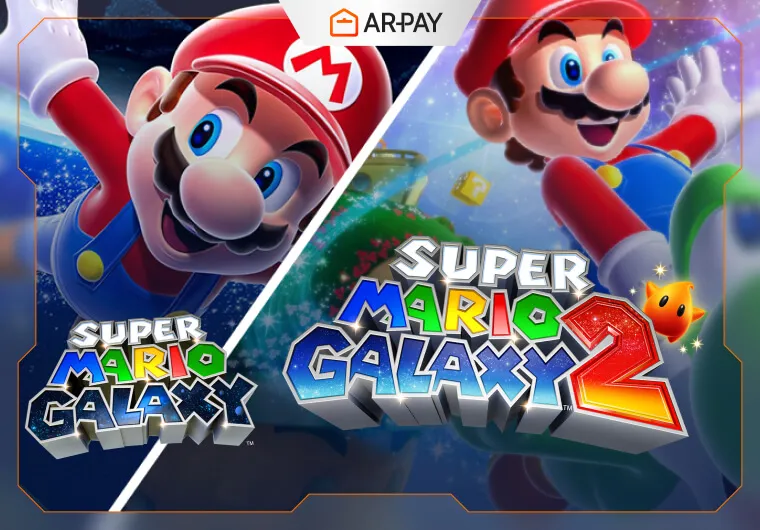
Few Nintendo comparisons still spark as much debate in 2026 as Super Mario Galaxy versus Super Mario Galaxy 2. Both games are treated like all-time greats for a reason: they took 3D platforming somewhere stranger, lighter, and more imaginative than most of their peers. Tiny planets, shifting gravity, orchestral music, and constantly surprising level ideas made the series feel magical when it first arrived on Wii. That magic has not really faded.
But these two games are not interchangeable. The first Galaxy feels like a complete journey with atmosphere, emotional texture, and a memorable sense of place. Galaxy 2 is faster, denser, and more openly focused on mechanical excellence. If the first game feels like a cosmic storybook, the second feels like Nintendo taking the same foundation and sharpening it into a near-relentless platforming machine. The better game depends less on raw quality than on what you want from Mario.
Core gameplay: invention versus refinement
Super Mario Galaxy deserves huge credit for introducing the series’ gravity-based identity. Running around spherical planets, flipping orientation in mid-jump, and navigating stages built around curved space still feels distinct today. It was not just a gimmick. Nintendo used gravity to make movement itself feel playful again. The result was a 3D platformer that constantly surprised players without becoming hard to read.
Galaxy 2 keeps that entire foundation, then trims away almost every piece of friction around it. The levels are tighter. The ideas come faster. Yoshi adds mobility and utility, while power-ups like Cloud Mario and Drill Mario create more specialized stage design. If the first game often pauses to let you absorb a concept, the sequel is more likely to push that concept hard, twist it, and move on before it gets comfortable. That gives Galaxy 2 the advantage in pure gameplay density.
Story, tone, and the feel of the adventure
This is where the first game pulls away for many players. Super Mario Galaxy gives Mario’s usual rescue plot an unexpectedly reflective tone through Rosalina, the Comet Observatory, and the storybook sequences that slowly add emotional context to the journey. It is still unmistakably a Mario game, but it also feels unusually gentle and melancholy at times. The hub world matters here. The observatory gives the adventure a home, a rhythm, and a sense that you are traveling through something larger than a level list.
Galaxy 2 deliberately steps back from that atmosphere. It is lighter on narrative framing, less interested in lingering between missions, and much quicker to send you into the next challenge. Some players prefer that because it keeps the pace sharp and avoids downtime. Others miss the emotional weight and the sense of wonder that the observatory added. In simple terms, Galaxy 1 has more heart; Galaxy 2 has more momentum.
Level design and creativity
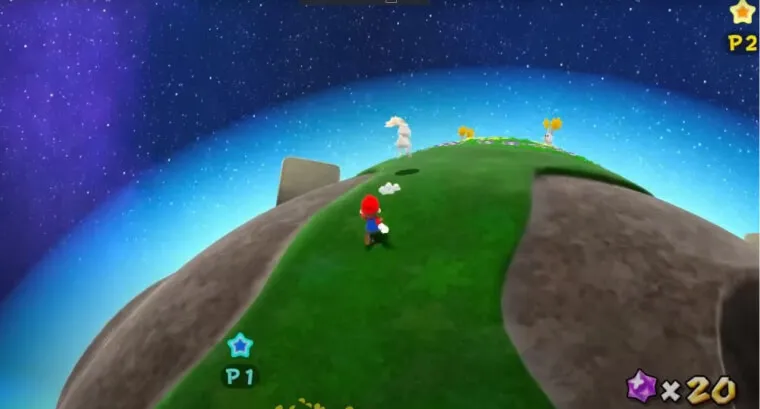
Both games are wildly creative, but they express creativity differently. Galaxy 1 often gives ideas more breathing room. A galaxy may feel like a miniature place with multiple objectives, hidden stars, and room to poke around. That exploratory quality helps certain levels feel memorable beyond their basic challenge. You are not only clearing a task; you are spending time inside a tiny theatrical world.
Galaxy 2 is more compressed and arguably more consistent. It delivers one striking idea after another and wastes very little time. It is the kind of sequel that seems determined to prove it can top the original every fifteen minutes. That approach makes it thrilling, but it also means it loses a little of the first game’s dreamlike spaciousness. If you value nonstop inventive platforming, Galaxy 2 probably wins. If you value a stronger sense of place and discovery, Galaxy 1 still has the edge.
Difficulty, pacing, and replay value
The original Galaxy is the friendlier recommendation for newer players, younger players, or anyone who wants a smoother ramp. It can absolutely challenge you, but it usually feels welcoming before it feels demanding. Galaxy 2 is more comfortable asking for precision sooner, and its optional endgame content is famous for pushing players much harder. That makes the sequel especially satisfying for experienced platformer fans who want a serious completionist chase.
Replay value also splits along those same lines. Galaxy 1 invites revisits because its worlds are enjoyable to inhabit. Galaxy 2 invites revisits because its challenges and mechanical variations are so tightly built. One rewards affection; the other rewards mastery. Neither approach is wrong, but they produce different memories.
Availability and practical value in 2026
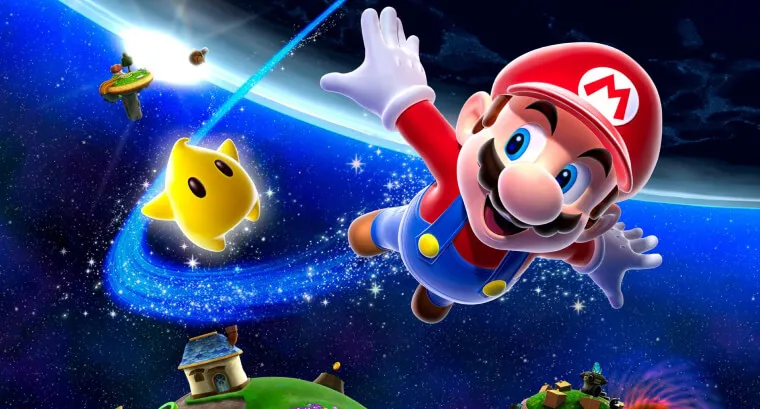
This comparison also changes depending on how you can actually play them in 2026. Super Mario Galaxy remains easier to access legally because it was included in Super Mario 3D All-Stars on Switch, though that collection’s long-term retail availability and secondhand pricing can vary a lot by market. Super Mario Galaxy 2 is still much more tied to original Nintendo hardware unless Nintendo changes its stance in the future. Any exact claims about used prices, rarity, or current resale value should be treated carefully because those figures shift constantly.
That practical difference matters. If you are buying only one game and want the simpler legal path, Galaxy 1 is usually the easier recommendation. If you already have the hardware access, Galaxy 2 becomes a much more realistic choice and, for some players, the better pure game.
So which one is better?
Choose Super Mario Galaxy if you want a more atmospheric experience, a stronger emotional tone, a memorable hub world, and a slightly more welcoming first step into this style of 3D Mario. Choose Super Mario Galaxy 2 if you want denser design, harder optional content, Yoshi, more specialized power-ups, and a sequel that rarely stops throwing brilliant ideas at you.
The real answer, of course, is that the comparison works because the games complement each other. Galaxy 1 feels like the artistic statement; Galaxy 2 feels like the mechanical masterpiece. One reaches for wonder, the other for refinement. In 2026, both still justify their reputation, and playing them back to back remains one of the clearest ways to see Nintendo at its most inventive.