Unknown 9 Awakening Gameplay Mechanics
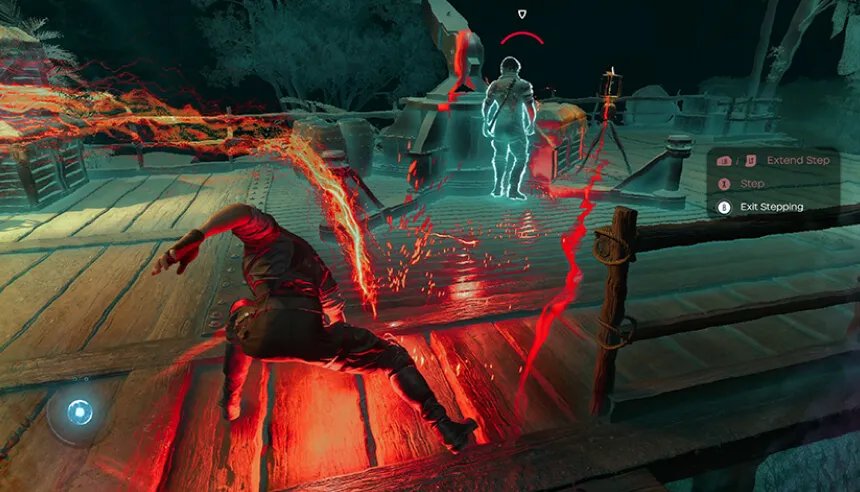 Unknown 9 Awakening features a blend of narrative-driven gameplay and innovative mechanics that create a unique gaming experience:
- Fold Abilities: Haroona, the protagonist, can use the mysterious power of the Fold to influence her surroundings. This includes abilities like Peek, which allows her to see hidden enemies and secrets.
- Stealth and Combat: Players can choose between stealth and combat approaches. Haroona can use Ripples to distract enemies and Shroud to move unseen, or engage in direct combat with powerful attacks.
- Stepping Mechanic: One of Haroona's most impressive abilities is Stepping, which lets her take control of an enemy's body and turn them against their allies.
- Environmental Interaction: The game encourages players to use the environment to their advantage, such as knocking enemies into traps or using environmental hazards to defeat tougher foes.
- Boss Battles: Players will face challenging boss battles, including mid-game bosses like the Bruiser, requiring strategic use of Haroona's abilities to overcome.
Where to Play Unknown 9 Awakening
 Unknown 9 Awakening is available on several platforms, so you can enjoy the game on your preferred device. Here are the platforms where you can play:
- PlayStation 4 and 5
- Xbox One and Series X|S
- PC via Steam
Unknown 9 Awakening Gameplay Strategies
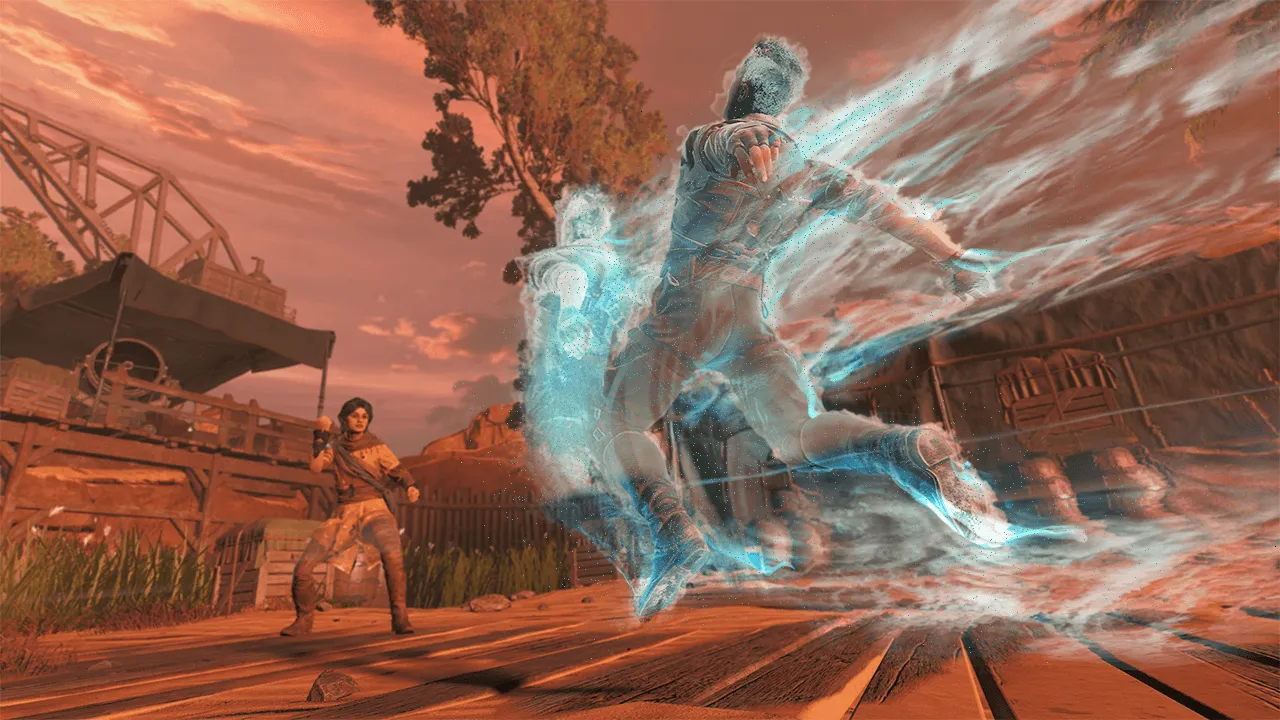 To excel in Unknown 9 Awakening, consider these gameplay strategies:
- Master the Fold Abilities: Utilize Haroona's Fold abilities like Peek to uncover hidden enemies and secrets, and Stepping to take control of enemy bodies.
- Stealth Over Combat: Whenever possible, opt for stealth to avoid unnecessary confrontations. Use Ripples to distract enemies and Shroud to move undetected.
- Environmental Interaction: Make use of the environment to your advantage by luring enemies into traps or using hazards to deal damage.
- Strategic Combat: When combat is unavoidable, pace the battle to your rhythm by moving enemies around like chess pieces. Use Push and Pull abilities to control the battlefield.
- Upgrade Wisely: Focus on upgrading Haroona's abilities to enhance her effectiveness in both stealth and combat situations.
Unknown 9 Awakening System Requirements
Here are the system requirements for Unknown 9 Awakening:Minimum Requirements:
- OS: Windows 10, 64-bit
- Processor: 4 or 6 cores / 8 threads / 3.6 GHz Base clock speed
- Memory: 12 GB RAM
- Graphics: 8 GB VRAM / AMD RX 580
- DirectX: Version 12
- Storage: 55 GB available space (SSD recommended)
Recommended Requirements:
- OS: Windows 10, 64-bit
- Processor: 6 cores / 12 threads / 3.4 GHz Base clock speed
- Memory: 16 GB RAM
- Graphics: 8 GB VRAM / AMD RX 5700 XT
- DirectX: Version 12
- Storage: 55 GB available space (SSD recommended)
Unknown 9 Awakening Visuals, Media, and Design
- Visuals: The game features a mix of realistic and stylized graphics. While some areas showcase expansive vistas and impressive environmental effects, there are moments where textures and enemy designs feel repetitive.
- Characters and Cinematics: The character designs and cinematics are crafted with attention to detail, bringing the story and world to life. The protagonist, Haroona, and other key characters are visually distinct and well-developed.
- Level Design: The game's level design is intricate, with environments that encourage exploration and interaction. The layout of levels supports both stealth and combat gameplay, providing a dynamic experience.
- Art Direction: The art direction is cohesive, maintaining a consistent style across characters, environments, and user interfaces. This consistency helps create a unified and engaging visual experience.
Conclusion
Unknown 9 Awakening combines rich storytelling with innovative gameplay mechanics, taking players on a thrilling journey through the life of Haroona, a young girl with mysterious powers. Available on PlayStation, Xbox, and PC, the game features unique Fold abilities, challenging boss battles, and intricate level designs. With high-quality visuals and a cohesive art direction, the game offers a captivating experience. Future expansions and cross-media content promise to further enrich the Unknown 9 universe, making it a must-play for fans of action-adventure genres. Stay ahead in the gaming world! Latest gaming news, exclusive insights, and updates on the hottest releases—everything you need in ARPay Gaming News!FAQs
What platforms is Unknown 9 Awakening available on?
Unknown 9 Awakening is available on PlayStation 4, PlayStation 5, Xbox Series X|S, Xbox One, and PC via Steam.Is there multiplayer functionality in Unknown 9 Awakening?
No, Unknown 9 Awakening is a single-player experience only. However, you can share the gameplay with friends via live streaming.What are the best strategies for new players?
- Master the Fold Abilities: Use Haroona's unique powers to navigate and combat.
- Stealth and Combat: Decide how to approach each situation. Stealth can be effective for early takedowns, while combat can be used for confrontations.
- Upgrade Wisely: Focus on upgrading Haroona's Umbric abilities early on, such as Stepping Dilation and Perfect Pull Strike.
- Environmental Awareness: Use the environment to your advantage, like knocking enemies into traps.
Are there any DLCs or expansions planned for the future?
There hasn't been any official announcement regarding DLCs or expansions for Unknown 9 Awakening yet. However, given the game's rich lore and engaging story, it's possible that future content could be added.Unknown 9 Awakening: What “Masterful Storytelling & Mechanics” Really Suggests
The title Unknown 9 Awakening - Masterful Storytelling & Mechanics sets a clear expectation: this is meant to be a game where narrative quality and gameplay design work together, not separately. When a title highlights both storytelling and mechanics, players usually expect more than a good plot or a fun control scheme. They expect harmony between what the game says and what the game makes them do.
Because the current body is empty, this explainer avoids unverified specifics such as release details, platform support, character names, world lore, or feature lists. Instead, it offers a practical framework for understanding and evaluating a game presented with this kind of promise. That still adds value: it helps readers make sense of the claim in the headline and approach the game with sharper expectations.
Why Storytelling and Mechanics Must Connect
In strong game design, story is not just told in cutscenes and text. It is also expressed through movement, challenge, pacing, and decision-making. If a game presents tension in the narrative but the gameplay feels disconnected, the emotional impact weakens. Likewise, even polished mechanics can feel shallow when they do not support a meaningful narrative arc.
The phrase “masterful storytelling & mechanics” implies integration. Players may expect actions in gameplay to reflect themes in the story, and narrative beats to meaningfully influence how they play. This integration is often the difference between a game that is merely competent and one that feels memorable.
How to Read a Story-Driven Action Experience
A useful way to approach a game like this is to read every design layer as communication. Visual direction communicates tone. Level structure communicates urgency or freedom. Challenge design communicates character growth and stakes. Even silence, slower sections, and repeated motifs can function as narrative tools.
If players treat gameplay and story as separate tracks, they may miss what the game is trying to say. A better method is to ask: why is this challenge placed here, and what does it express about the current point in the narrative? That single question often reveals the craft behind “masterful” design claims.
Practical Checklist: Evaluating the Storytelling Quality
- Clarity: Are the core motivations understandable without over-explaining every detail?
- Consistency: Do tone, dialogue style, and world rules remain coherent across scenes?
- Pacing: Does the story alternate intensity and quiet moments in a way that feels intentional?
- Emotional progression: Do stakes evolve, or does the narrative feel flat from start to finish?
- Payoff: Do earlier narrative setups lead to satisfying outcomes later?
This checklist does not require spoilers or deep lore knowledge. It helps readers judge narrative craft based on design signals they can observe while playing.
Practical Checklist: Evaluating the Mechanics
- Readability: Are controls and feedback understandable in both calm and high-pressure moments?
- Responsiveness: Do actions feel predictable and fair, especially during difficult segments?
- Depth: Does the system reward learning, timing, and adaptation over random repetition?
- Variety: Do mechanics evolve enough to stay engaging without becoming chaotic?
- Narrative fit: Do core mechanics reinforce the game’s thematic identity?
A game can have fast, polished controls and still feel mechanically weak if systems do not evolve or support meaningful choices. The strongest mechanics are not just smooth; they are expressive.
The Bridge Between Both: Ludonarrative Alignment
One of the most useful terms for this topic is ludonarrative alignment, meaning gameplay and story point in the same direction. When alignment is strong, players feel the narrative rather than only hearing it. Their actions carry thematic weight, and mechanics become part of storytelling itself.
When alignment is weak, players notice friction: the script says one thing, the gameplay pushes another. For a title framed as “masterful storytelling & mechanics,” alignment is likely the key metric readers should pay attention to.
Comparison Point: Cinematic Narrative vs Systemic Narrative
Story-focused games often lean toward one of two approaches. Cinematic narrative emphasizes authored sequences, dialogue, and dramatic set pieces. Systemic narrative emerges through player interaction, experimentation, and consequences inside gameplay systems. Many modern games blend both.
For an article with this title, a useful angle is not choosing one approach as superior, but asking how well they are combined. If cinematic moments are strong but gameplay feels detached, immersion drops. If systems are deep but story framing is thin, emotional resonance may fade.
Player Tips: How to Get More From a Story-Mechanics Game
- Play with attention, not speed. Rushing often hides the design connections that make the experience special.
- Notice repeated symbols, level patterns, or challenge structures; these often mirror narrative themes.
- After key sequences, ask what changed mechanically and why it may matter narratively.
- If a section feels frustrating, evaluate whether difficulty is thematic, instructional, or simply uneven.
- Keep short notes on standout moments; this improves interpretation and review quality later.
These habits help players move from passive consumption to active reading of game design, which is where many “masterful” experiences become most rewarding.
Common Misreads to Avoid
- Assuming story quality equals amount of dialogue or cutscene time.
- Judging mechanics only by immediate comfort, not long-term expressive depth.
- Ignoring pacing choices and calling every slower section unnecessary.
- Separating narrative and gameplay evaluation too strictly.
- Expecting every design choice to appeal to every playstyle equally.
Avoiding these misreads gives a fairer view of what the game is attempting, especially for readers deciding whether this style of experience matches their preferences.
Summary Box
- The title promises a blend of strong narrative craft and meaningful gameplay design.
- The key standard is alignment: story themes and player actions should reinforce each other.
- Readers can evaluate quality through clarity, pacing, responsiveness, depth, and payoff.
- A better player approach is careful observation, not rushing to completion.
- Even without specific plot facts, this framework helps assess whether the “masterful” claim is earned.
Final Take
Unknown 9 Awakening - Masterful Storytelling & Mechanics positions itself as a game where design unity matters. For readers and players, the smartest lens is not hype or skepticism alone, but structured evaluation: does the game communicate through both narrative and interaction with equal confidence? If yes, the experience can stand out far beyond surface-level spectacle.