Patch articles age faster than almost any other kind of game coverage, and VALORANT Update 10.00 is a perfect example. In early 2025, this piece worked as a fast-moving breakdown of a major competitive shake-up: a new agent, map reworks, ranked adjustments, performance fixes, and store changes all bundled into one headline patch. In 2026, though, almost every exact claim inside it has become patch-sensitive. File size, release timing, RR behavior, store rotations, map geometry tweaks, agent kit wording, and bug-fix specifics all belong to the kind of information that can become unreliable the moment later patches land.
That does not make the article useless. It just changes what it is good for. Instead of reading it as a current guide to live VALORANT, it makes more sense to read it as a snapshot of what Riot seemed to want Patch 10.00 to represent: a fresh season opener built around a new initiator, smoother competitive quality-of-life changes, meaningful map maintenance, and a continued effort to make gunplay and performance feel cleaner. The editorial structure still works. The factual precision now needs caution.
Patch 10.00 as a season-reset statement
The article presents Patch 10.00 as the kind of update that tries to reset the mood around the game. It is not framed as a tiny balance pass. It is framed as a season-defining package. That matters because VALORANT players usually judge these milestone patches by a few key questions: does ranked feel fairer, do the maps feel less frustrating, does a new agent actually open strategy instead of creating noise, and do the weapons behave more consistently?
Seen through that lens, the original write-up still has a coherent spine. It is trying to say that Riot wanted Patch 10.00 to feel like a cleanup-and-expansion moment. The problem is that many of the exact mechanics it names are now too specific to trust without checking the official patch notes from that time against what was actually deployed.
The new agent section: exciting, but highly time-sensitive
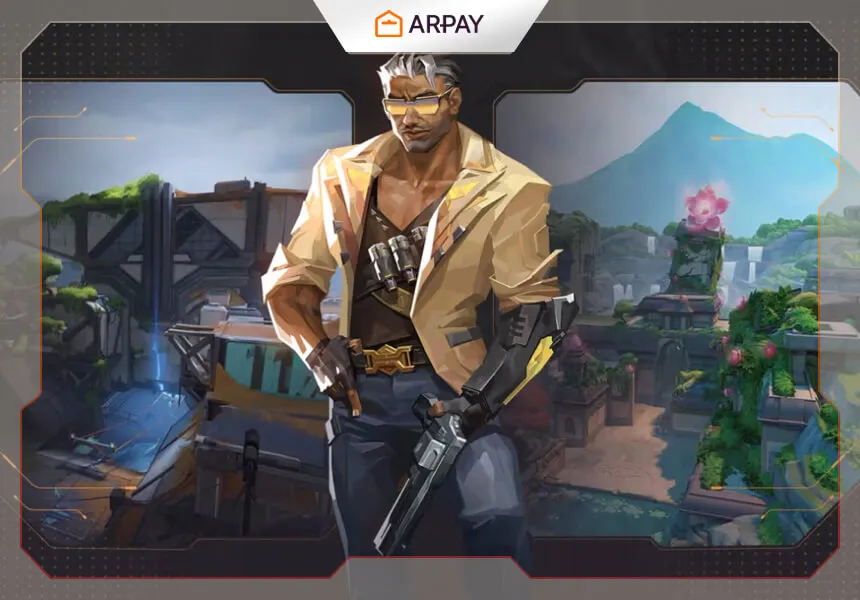
The article’s biggest headline is Agent Tejo, described as a Colombian Initiator built around explosives, recon pressure, a stealth drone, guided missiles, and a strike-based ultimate. That is exactly the kind of information players care about first, because a new agent changes not just team comps but also pacing, utility layering, and how sites are contested. The write-up sells Tejo as a flexible attack-and-defense disruptor, which is a useful role description even today.
But the detailed ability descriptions are the least stable part of the article. Exact names, charge behavior, concuss or reveal effects, input rules, and console-specific notes are all the kind of granular text that must be verified before reuse. In other words, the broad editorial takeaway is still valuable: Patch 10.00 was positioned around an initiator-style agent meant to alter site pressure and information flow. The literal kit text should not be trusted as-is in 2026.
Map updates: the part most likely to go stale fast
Map reworks are always hard to preserve in an evergreen way because they are tiny by design and huge in effect. A widened catwalk, a changed window, a moved box, a rope noise tweak, or a fixed boost spot can totally reshape a fight for active players while sounding minor to everyone else. The article names detailed changes for Haven, Split, Bind, and Pearl, from cover placement to teleporter cooldowns to map-routing adjustments.
What still holds up is the intention behind those notes. The article suggests Riot was trying to reduce awkward camping angles, clean up frustrating sightlines, and make rotation and cover behavior feel less lopsided. That is the useful 2026 version of the point. The patch appears to have been about friction reduction and readability rather than dramatic reinvention. The exact geometry claims, however, should be treated as historical and rechecked before publication as fact.
Ranked, quality-of-life, and performance claims
The ranked and interface sections are another mixed case. Ideas like better solo-queue treatment, more rewarding competitive feel, cleaner scoreboard readability, faster minimap pinging, remembered buy-menu habits, and saved practice-range settings all sound plausible and thematically consistent with a season-start patch. Those are exactly the kinds of things competitive players notice quickly because they affect every single session.
Still, the exact claims here are not safe to preserve without review: RR scaling by top-fragging, seven placements, comeback bonuses, disconnect protection rules, loading times cut in half, up to 20% frame-rate improvements, cross-account crosshair syncing, and audio-control specifics are all too precise. The stronger editorial version is simply that Patch 10.00 was framed as a comfort patch as much as a content patch. It wanted VALORANT to feel smoother, not just newer.
Weapon bugs, social systems, and store updates
The article also leans heavily on bug-fix credibility. It lists fixes for Operator scope visuals, Phantom reload animation issues, Vandal tracers, Guardian swap bugs, Spectre movement accuracy behavior, Classic burst registration, utility interactions on maps, footstep sound problems, server issues during agent select, and Sage wall hitbox behavior. That kind of list is believable in a live-service shooter, but it is almost impossible to carry forward accurately without direct reference to the official notes.
The store and social notes are even more fragile. Limited-time shop sections, battle pass item returns, 48-hour rotations, clearer voice chat, expanded pings, and custom game browser upgrades all sound like the sort of features people would immediately debate, but they are also exactly the kind of systems that can be revised, removed, or reworked over time. So in 2026, these details are better treated as “what the article said mattered then” rather than “what players should expect now.”
What this article is actually useful for now
As a current patch guide, this piece is too stale. As a record of priorities, it is still useful. It shows what players wanted from a major VALORANT update: a new agent that reshapes utility, maps that reduce frustration, weapons that feel more reliable, ranked systems that feel less punishing, and interface changes that reduce friction. That is why the article still has value. It captures the structure of player demand, even if too many of its exact answers now require human review.
Conclusion
VALORANT Update 10.00 reads in 2026 like a strong patch roundup trapped inside a stale timestamp. Its energy is still right. Its details are not safely evergreen. The article succeeds at showing what mattered about a milestone patch: new strategic identity, map health, ranked comfort, and cleaner gunfeel. But because so much of its value depends on exact patch-note information, it should now be treated as a historical explainer unless a human re-checks the official notes line by line.