It Takes Two still stands out in 2026 because it treats cooperation as the whole point, not a side feature. Most multiplayer games let two people share a space. This one asks two people to share responsibility. Progress depends on communication, timing, and the willingness to treat every obstacle like a joint problem instead of an individual challenge. That design choice is what makes the game memorable long after the final chapter.
This refreshed guide focuses on what still matters most: why the game feels so different, how its co-op structure works, what habits make play smoother, and which technical details from older writeups should now be handled with care. Some platform, performance, and feature-specific claims in the source article may no longer be safe to present as universal facts without live checking, so those areas are flagged where appropriate.
Why It Takes Two still feels special
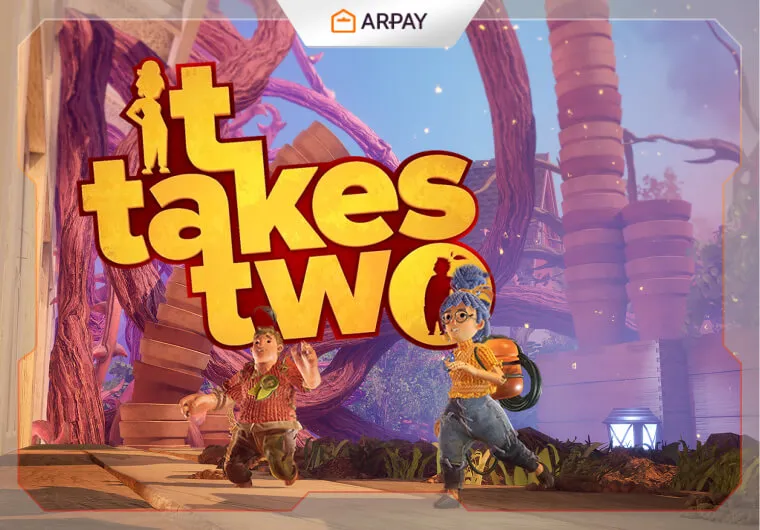
The game’s core idea is simple but powerful: two players control Cody and May, and neither one can carry the experience alone. Every chapter gives both players distinct tools and then asks them to combine those tools in ways that feel playful, surprising, and sometimes wonderfully chaotic. That constant asymmetry keeps the campaign fresh. You are not repeating one shared move set for ten hours. You are repeatedly learning how your partnership works under new conditions.
That is where the game’s design still feels bold. It refuses the solo-first mindset that many co-op games quietly keep in reserve. You are meant to depend on the other player. When one person lines up a puzzle step and the other completes it, the payoff feels earned in a way that ordinary drop-in co-op often does not. The result is a game that is mechanically varied but emotionally consistent: everything reinforces teamwork.
What the best co-op sessions get right
If you are starting It Takes Two for the first time, the most useful tip is also the least glamorous: talk constantly. The game rewards players who narrate what they see, warn each other about hazards, and pause briefly before trying to brute-force a sequence. Many failed attempts come from silence, not difficulty.
A good rhythm is to test each player’s ability separately before combining them. If Cody has a setup tool and May has the action trigger, try each piece in isolation first. That lowers confusion and helps both players understand what the game is actually asking for. The same logic works in platforming sections too. Instead of rushing synchronized jumps over and over, count down, agree on timing, and commit together.
Patience matters more than raw skill in many sections. One player may naturally solve puzzles faster, while the other reacts better under pressure. The strongest pairs usually stop treating mistakes as proof that someone is “bad” and start treating them as missing information. Once you do that, the game opens up and becomes much less frustrating.
Story and theme: why the mechanics work emotionally
The story follows Cody and May during a painful point in their relationship, then turns that emotional distance into the game’s central design engine. Instead of separating narrative and gameplay, It Takes Two uses co-op itself to express miscommunication, resentment, adjustment, and gradual empathy. When the pair learns to coordinate better, the player experience and the relationship arc move in the same direction.
Dr. Hakim’s role as a loud, intrusive guide can be divisive, but structurally he keeps the game focused on reconciliation and collaboration. Each chapter becomes both a new mechanical challenge and a new emotional test. That is one reason the campaign stays memorable: even when the tone swings wildly between absurd comedy and genuine tenderness, the through-line remains easy to follow.
How long it lasts and why that length works
The source article describes the main campaign as roughly 10 to 15 hours, and that range still feels like the right way to frame it as a general expectation. More importantly, the length works because the game is built around constant reinvention. A longer version of It Takes Two could have become exhausting if the mechanics repeated too often. Instead, it keeps rotating in new ideas before most of them wear out their welcome.
That pacing makes the game especially good for pairs who do not always have huge blocks of time. You can finish a chapter or two in a session and still feel like you saw something new. It also means the game stays approachable for players who love co-op but are not necessarily looking for a giant live-service commitment.
Technical and platform notes that deserve caution
The source article includes a long list of system requirements, console performance claims, Friend’s Pass details, cross-platform connectivity statements, and platform-specific features like Smart Delivery, Quick Resume, cross-generation play, and Nintendo Switch support. Some of those claims may be accurate in part, but taken together they are too specific to preserve confidently here without checking current official store pages or support notes.
The safest 2026 guidance is practical rather than promotional: before buying or reinstalling, confirm the version you plan to play, the exact platform support available to your duo, whether online co-op requires separate accounts or subscriptions, and how any invite or pass system currently works. If you are playing on PC, treat older minimum and recommended specs as a starting point rather than a permanent truth.
Who should play it in 2026
It Takes Two is still one of the easiest co-op recommendations for pairs who want a complete, authored adventure instead of an endless multiplayer loop. It works especially well for couples, siblings, close friends, and mixed-skill duos because the game is more interested in shared problem-solving than individual leaderboard dominance. If your favorite co-op memories come from talking through solutions and laughing through mistakes, it remains a great fit.
It is less ideal if one player strongly dislikes communication-heavy play or if your duo wants a highly customizable difficulty structure, since the source article notes there are no traditional difficulty settings. The experience depends on both players buying into the same collaborative spirit. If they do, the game pays that off repeatedly.
Conclusion
It Takes Two remains impressive because it never forgets what it wants to be. It is not trying to be a solo adventure with optional support. It is a full co-op game built around trust, experimentation, and constant communication. That clarity gives it lasting power. Even in 2026, it still feels like one of the clearest examples of cooperative-first design done right. Just be careful with older platform and performance summaries, because those are the parts most likely to age unevenly.