Mobile play-to-earn gaming still attracts attention in 2026, but the conversation has changed. It is no longer enough for a game to promise tokens, NFT ownership, or a flashy blockchain label. Players now care more about whether a game is actually fun on a phone, whether its economy is stable enough to understand, and whether its mobile version is truly playable rather than technically “in development.” That shift makes a refreshed roundup useful, because the original version captures many of the best-known names in the space, but a lot of its platform, reward, and roadmap claims are now too time-sensitive to repeat without caution. []
The strongest way to read this list in 2026 is not as a guaranteed earnings guide. It works better as a genre map. Some projects focus on card battles, some on RPG grinding, some on property speculation, some on movement, and some on pure crypto-economy experimentation. That means the best mobile P2E game is not the one with the loudest token story. It is the one whose gameplay loop still feels worth returning to even when rewards fluctuate.
The strategy and card-battle standouts
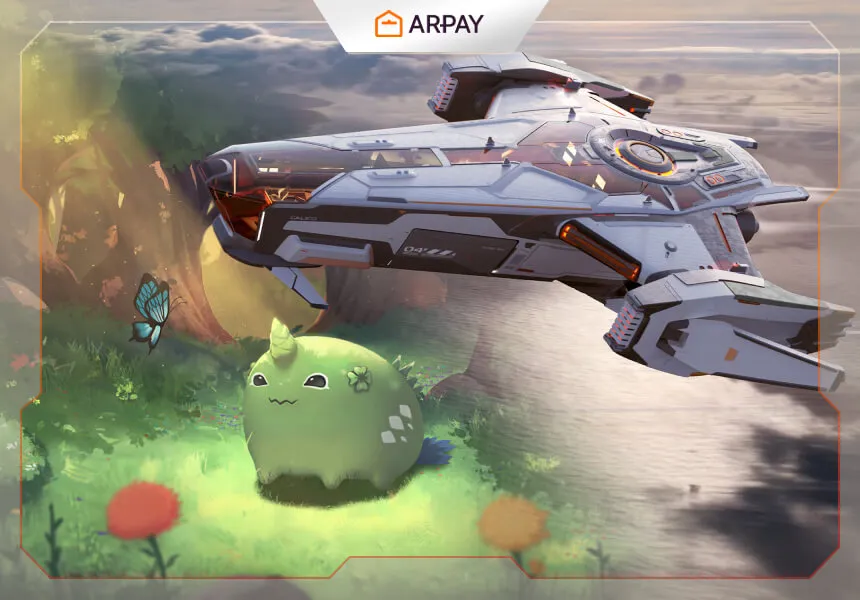
Axie Infinity remains the easiest starting point for any roundup because it helped define the modern P2E conversation. Its mix of creature collecting, team-based battles, and token-linked progression gave the whole category a recognizable face. The original article also points to Axie Infinity: Origins as a friendlier route for new players, which still makes sense as a framing device, though the exact state of its mobile distribution and reward systems should be treated carefully in 2026. [] If you like turn-based planning and building teams around synergy rather than reflexes, Axie still represents the clearest “foundational” P2E template.
Gods Unchained and Splinterlands sit in a similar family, but each scratches a different itch. Gods Unchained leans into collectible card game strategy and mythic presentation, appealing most to players who enjoy deck construction, matchups, and a more deliberate competitive pace. Splinterlands is usually easier to describe as faster and more automation-friendly, with a structure that can feel more accessible to players who like card economies but do not necessarily want the same level of manual complexity every match. In both cases, though, mobile availability, beta labels, and blockchain specifics are exactly the sort of details that may have shifted and should be checked before publication as hard facts. []
The action-first games
Thetan Arena stands out because it tries to meet players on familiar competitive ground. Instead of asking people to learn an entirely new economy before they can have fun, it presents a hero-based action structure that feels closer to the language of mobile multiplayer games people already understand. That matters. P2E titles often struggle when their economy is more compelling than their actual moment-to-moment play. Thetan’s appeal is that the pitch begins with matches, roles, and quick action rather than spreadsheets.
MIR4 occupies a different action space by offering MMORPG progression instead of short arena loops. If you want clan politics, grinding, open-world progression, and a more traditional fantasy structure with blockchain layers attached, MIR4 is the name in this lineup that most clearly aims for long-term time investment. EV.io, by contrast, belongs to the browser-shooter branch of the genre. Its appeal is speed. Players interested in a Halo- or Quake-style rhythm may find that more attractive than slower economic sims, though claims about touch optimization, mobile support quality, and actual reward consistency should be reviewed before being treated as settled. []
The economy and world-building games
Upland, Alien Worlds, DeFi Kingdoms, and My Neighbor Alice all push the category away from “game as match” and toward “game as world.” Upland is the cleanest property-trading example in the roundup, built around digital real estate and location-driven ownership ideas. Alien Worlds leans harder into mining, staking, governance, and faction-style blockchain participation. DeFi Kingdoms blurs RPG framing with decentralized finance systems, while My Neighbor Alice sits closest to the cozy social-farming side of the genre.
These are also the projects where “mobile” can get slippery. Some are truly app-based, some are mobile-friendly through browsers, and some were described in the original piece as being in testing or development. That means they belong in a 2026 roundup more as ecosystem examples than as guaranteed polished phone-native recommendations. [] If a reader wants low-friction pick-up-and-play action, these may feel too economy-heavy. If they enjoy trading systems, virtual land, staking mechanics, and community governance, they may be exactly the point.
The experimental and niche picks
STEPN remains one of the most recognizable attempts to merge real-world behavior with token rewards. Its move-to-earn structure is conceptually strong because it gives players a simple premise: walk, jog, or run, and the app tracks that activity for in-game returns. Whether that model feels compelling long term depends on how much you value fitness motivation versus pure game design. It is more lifestyle loop than traditional game loop, and that difference matters.
Crazy Defense Heroes, REVV Racing, Zed Run, Nine Chronicles, Star Atlas, and Illuvium show how broad the category became. Tower defense, motorsport, horse racing, decentralized RPG progression, space strategy, and creature-focused RPG systems all appear here. But this variety is exactly why the original article now reads as partially stale. Several of these entries were framed around mobile betas, apps in development, planned versions, or future-facing support. In 2026, those statements cannot be trusted without fresh research. [] They still matter as signals of ambition, but not as reliable launch-state facts.
How to choose the right mobile P2E game
The simplest way to choose is to ignore the earnings pitch first and sort by genre. If you like tactical card play, start with Axie Infinity, Gods Unchained, or Splinterlands. If you want live action, look at Thetan Arena or MIR4. If you prefer economy-building and ownership loops, Upland or Alien Worlds make more sense. If you want something closer to a lifestyle app, STEPN is the obvious outlier. This approach helps because token economics are unstable by nature, while genre preference is much more durable.
It is also smart to assume every reward claim needs skepticism. Token prices move, reward structures get rebalanced, mobile access can change, and blockchain networks evolve. A game that once looked generous can become far less attractive after updates, while a slower project can improve if its onboarding gets better. That is why any claim about “best earnings,” easy profit, or stable passive returns should be treated as review-heavy material in 2026. []
Conclusion
The mobile P2E landscape is still interesting in 2026, but not for the same reasons that made it explosive in earlier years. The novelty of NFTs and token rewards is no longer enough on its own. The games that matter are the ones that can survive scrutiny as games first and reward systems second. This roundup still offers a strong overview of the main branches of the genre, from battle games and card systems to real-estate sims and movement-based apps. What it cannot safely offer without new reporting is a definitive snapshot of which titles are fully live, most profitable, or best supported on mobile right now. []